Top Markets for LS Adaptive™ & Hana Fasteners™
Download the Top Markets for LS Adaptive™ & Hana Fasteners™ Guide here
Who We Help: Adaptive Clothing for Every Need
Individuals Who Benefit Most
These are people who experience greater comfort, independence, and confidence thanks to our easy-to-use, one-handed, and sensory-friendly fasteners.
People with Arthritis: Pain, stiffness, and reduced grip from osteoarthritis or rheumatoid arthritis make buttons and zippers difficult.
Stroke Survivors: Hemiparesis or hemiplegia often limits one side of the body, making true one-handed clothing solutions critical.
Parkinson’s Disease Patients: Tremors and slow movement (bradykinesia) can make small fasteners frustrating or inaccessible.
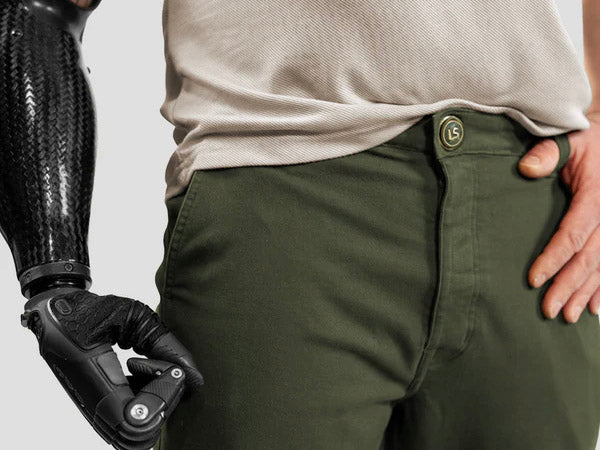
Amputees / Limb Difference: Users with upper limb difference or limited dexterity need clothing that does not require bilateral input.
Cerebral Palsy & Muscular Dystrophy: Spasticity, weakness, or coordination issues limit hand use, requiring adaptive fastening systems.
Spinal Cord Injury Survivors: Limited fine motor control or hand dexterity due to SCI. Individuals benefit from simplified, independent dressing tools.
People with Multiple Sclerosis (MS): Fluctuating grip strength and dexterity require flexible clothing solutions that accommodate good and bad days.
Older Adults / Seniors: Age-related changes in strength, joint flexibility, and vision increase the need for intuitive dressing solutions.
Other Disability Communities
Autism / Sensory Sensitivities: Soft fabrics, tagless designs, and smooth fasteners reduce sensory overload during dressing.
Visual Impairment: Tactile cues and fasteners that align without sight, such as magnetic or guided closures, support independence.
Essential Tremor: Unsteady hands benefit from larger or simplified fasteners instead of zippers or small buttons.
Acute & Alternate Users
Injury Recovery: People healing from fractures or sprains often cannot use one hand. One-handed dressing becomes essential.
Post-Surgical Patients: Shoulder or hand surgeries can temporarily prevent normal dressing. Adaptive clothing aids recovery.
Women who are Pregnant/Postpartum: Reduced range of motion or C-section limitations call for easier, more comfortable clothing options.
Occupational Needs: Workers needing rapid garment changes or PPE, such as healthcare, EMS, and fire, benefit from fast, one-handed closures.
Caregiving & Institutional Markets
Family Caregivers: Adaptive clothing supports loved ones while easing the physical burden of dressing assistance.
Professional Caregivers: Efficient dressing means less time and physical strain per patient, lowering injury risk for staff.
Rehabilitation Clinics / OTs: Fasteners that support therapy goals like independence and functional motion.
Institutional Buyers
Hospitals & Rehab Centers: Stocking adaptive apparel improves patient experience and post-op recovery.
Assisted Living & Long-Term Care: Supports dignity and autonomy for residents who may struggle with dressing.
Retailers of Adaptive Products: Expanding offerings with innovative, stylish, functional adaptive clothing.
Disability-Oriented Nonprofits & Advocates: Endorsing and distributing accessible products aligned with their mission.
Lifestyle & Inclusion Segments
Adaptive Sports Participants: Athletes who need activewear with fast, functional dressing options.
Inclusive Fashion Consumers: Buyers seeking style that supports accessibility, normalizing adaptive designs.
Universal Design Shoppers: People of all ages who prefer smart designs that work for everyone, today or in the future.

Download the Top Markets for LS Adaptive™ & Hana Fasteners™ Guide here